

Percy Rojas
Ausencias Presentes: A photographic journey of truth and justice in Peru
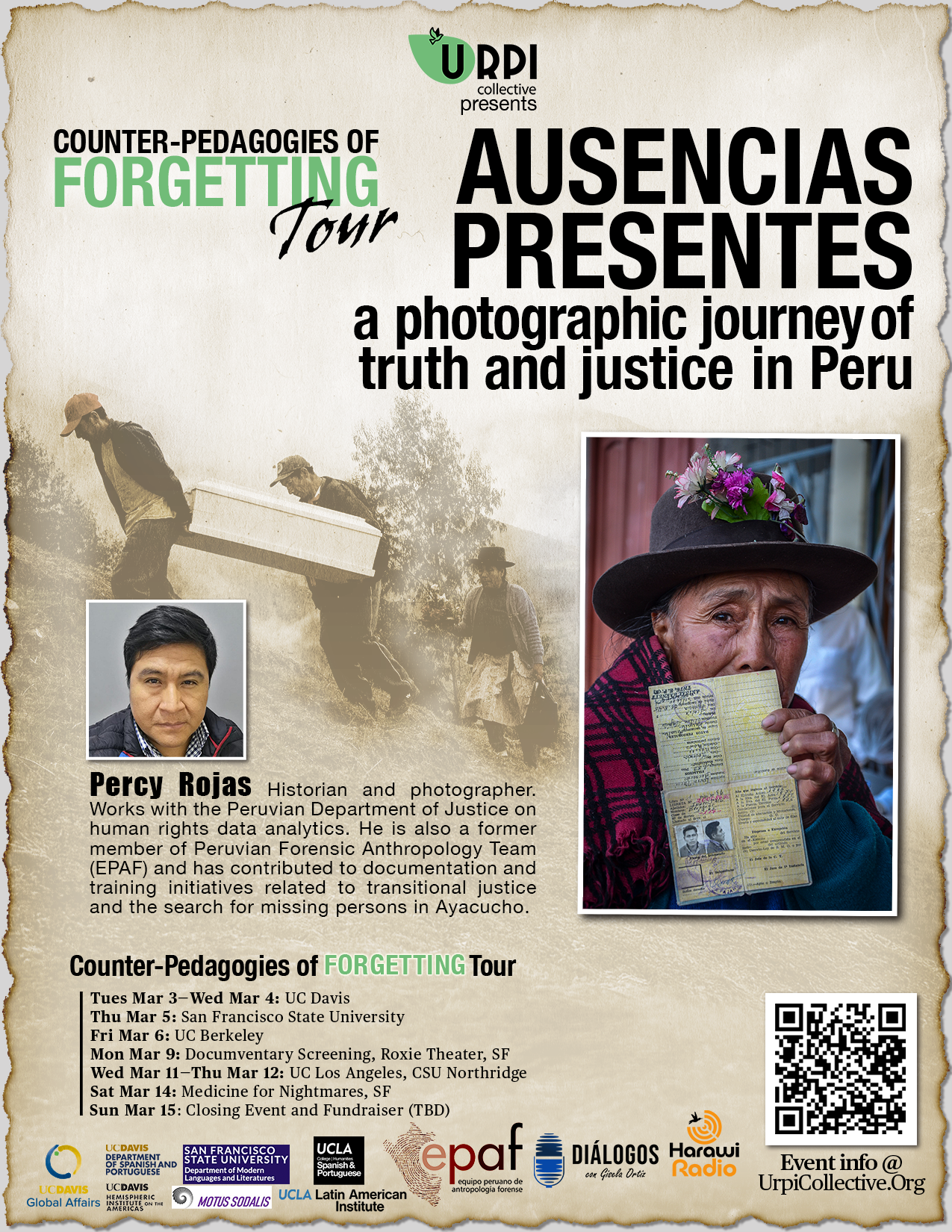
Historian, graduated from Universidad Nacional Mayor de San Marcos (UNMSM), and a photographer from Centro de la Imagen with emphasis on Photography and Anthropology.
Member of the Peruvian Forensic Anthropology Team (EPAF) since 2009. Between 2012 and 2017, he led the Field School on Transitional Justice and the Search for the Disappeared, held in communities in the Pampas–Qaracha river basins in south-central Ayacucho each June, organized by EPAF. He was responsible for conducting preliminary forensic research on victims from the period of violence in the department of Ayacucho; providing human-rights training for relatives of the disappeared; interviewing victims’ family members; and serving as a forensic photography expert in the cases of Raccaya Umasi, Santa Rosa, Pucamarca, and Lurigancho Prison, among others. He is a Bilingual Public Interpreter and translator (Quechua) recognized by Peru's Ministry of Culture.
Expertise and Specialized Training:
Human Rights for Reconciliation
Memory, Justice, and Memory Policies in Peru
Public Policies with an Intercultural Approach
Human Rights–Based Approach in Public Administration.
About the series
Since 2009, the Peruvian Forensic Anthropology Team (EPAF) has worked with relatives and victim organizations in the Pampas and Qaracha river basins—across Huancasancos, Víctor Fajardo, Sucre, and Vilcashuamán in south-central Ayacucho—offering human-rights empowerment workshops and supporting communities as they organize for truth and justice. In parallel, EPAF has conducted searches for missing persons through preliminary investigations, exhumations, forensic analyses, and dignified burials, serving as both party-appointed and official experts.
EPAF also led antemortem record-registration campaigns and memory workshops to strengthen individual and collective remembrance in communities marked by the period of violence. Families arrived carrying photographs and identification documents, the remaining traces of loved ones who were disappeared or killed.
Ausencias Presentes is shaped by those traces. The series presents photography as testimony through portraits, documents, stories, and the landscapes of Ayacucho, making visible how absence persists in the present and how the act of searching becomes a form of care, dignity, and resistance to erasure.
Karina Pacheco Medrano
El año del viento (2022)
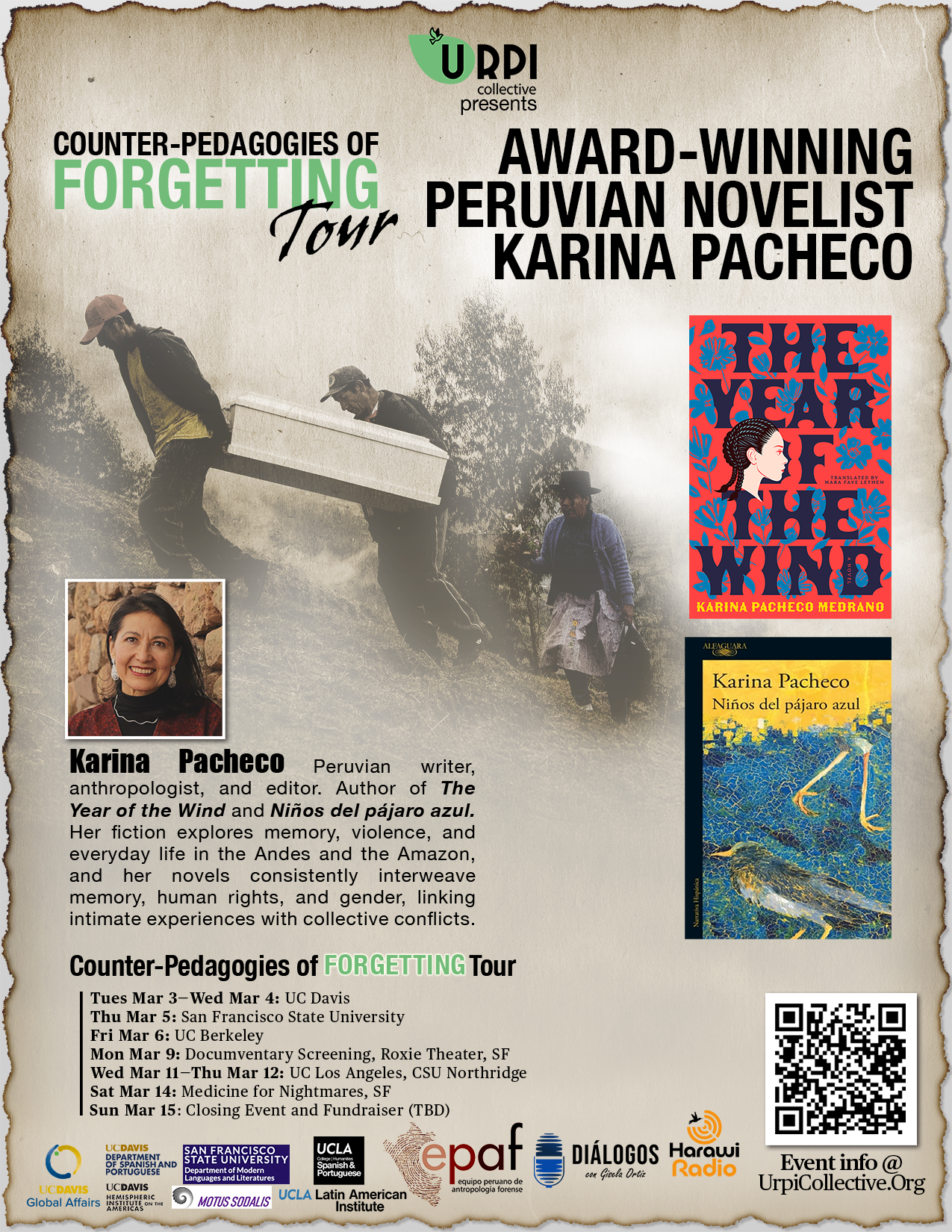
Writer, anthropologist, and editor, she holds a Ph.D. in Anthropology of the Americas and is also a specialist in Inequality, Cooperation, and Development from the Complutense University of Madrid. She studied Anthropology at the National University of San Antonio Abad of Cusco and completed the UNESCO–Casa de América (Madrid) Diploma in Amerindian Studies.
Across both literature and social sciences, her books and articles focus primarily on political violence, historical memory, and questions of racism, gender, and discrimination in Latin America.
In literature, she has published the novels El año del viento (National Literature Prize 2022, awarded by Peru’s Ministry of Culture), Las orillas del aire, El bosque de tu nombre, Cabeza y orquídeas (winner of the Federico Villarreal National Novel Prize, 2010), La sangre, el polvo, la nieve, No olvides nuestros nombres (Regional Novel Prize of the INC Cusco), and La voluntad del molle. Her short-story collections include Niños del pájaro azul, Lluvia, El sendero de los rayos (El Comercio “Luces” Award for Best Short-Story Book, 2013), and Alma alga. She also served as editor of Cusco, espejo de cosmografías. Antología de relato iberoamericano. Her stories have appeared in numerous anthologies and journals across Latin America, the United States, and Europe, with some translated into French and English.
In the social sciences, she edited K’intu. Historias, memorias y recorridos de la hoja de coca. Antología, siglos XVI–XXI, and is the author of Historia del Parque Nacional Bahuaja Sonene y de la Reserva Nacional de Tambopata, Racismo, discriminación y exclusión en el Cusco, Incas, indios y fiestas, and La diversidad oprimida.
She directs Ceques Editores, an independent press specializing in literature, history, and anthropology, for which she has translated works from English and French, including The Inca Civilization in Cuzco by Tom Zuidema, a new edition of La Vision des Vaincus, and Paradis du Nouveau Monde by Nathan Wachtel.
Gisela Ortiz
Before the Memory Fades: EPAF, Antemortem Forms, and the Urgency of Dignified Return
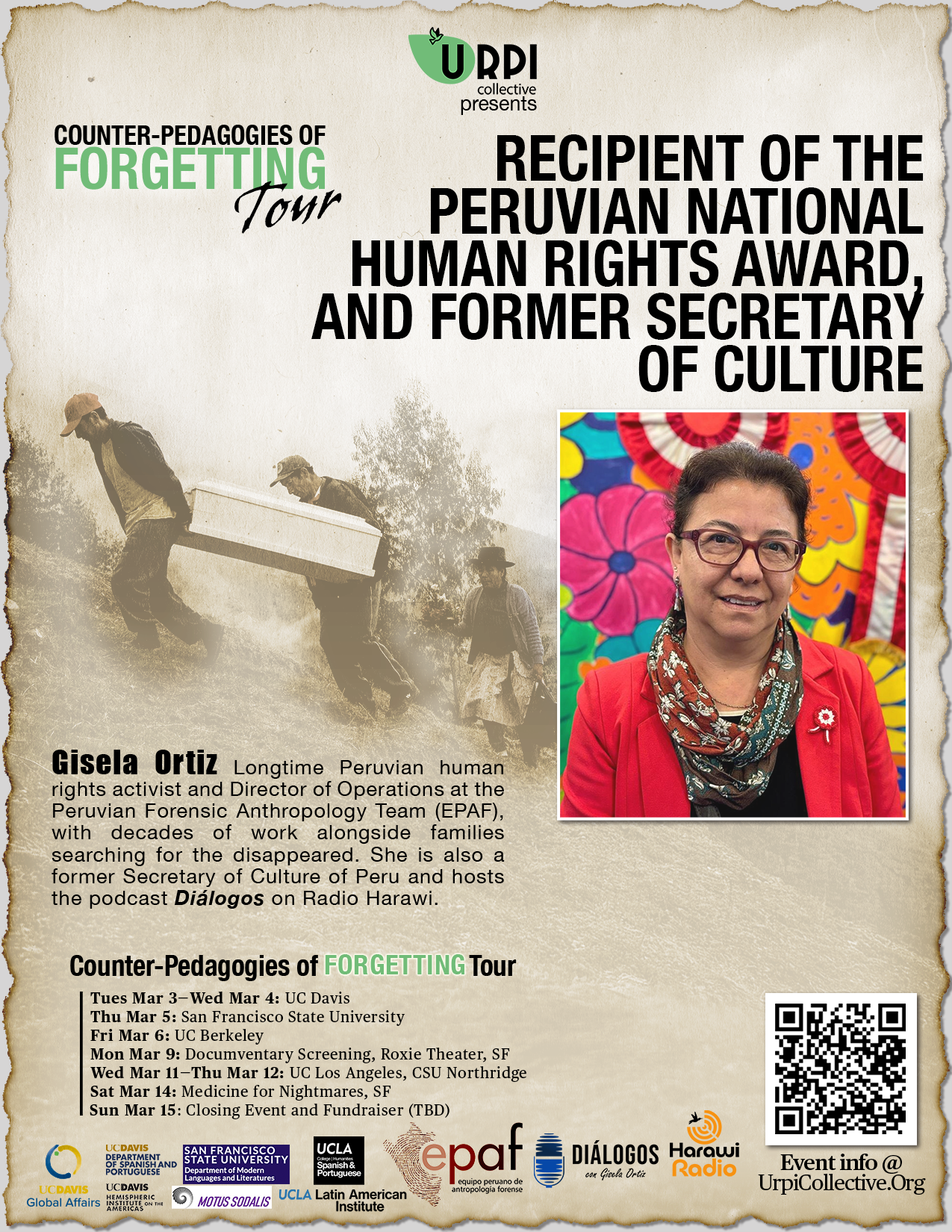
Gisela Ortiz holds a B.A. in Business Administration from the National University of Education Enrique Guzmán y Valle. She brings fifteen years of professional experience as Director of Operations at the Peruvian Forensic Anthropology Team (EPAF), along with extensive experience in public-sector management. Her postgraduate training includes graduate diplomas in Small Business Management (ESAN University) and in Corporate Social Responsibility (University of the Pacific and VINCULAR, Pontifical Catholic University of Valparaíso). She has also completed graduate-level coursework toward an M.A. in Public Management at the Universidad San Martín de Porres and the European Centre of Innovation and Management (EUCIM).
Her project leadership spans collective and individual memory initiatives, the collection of antemortem records, the strengthening of victims’ families’ organizations, and public-facing human rights advocacy, with a particular emphasis on developing public policies to search for the disappeared.
A human rights activist for more than three decades, Ortiz represents the families in the La Cantuta case. She is a two-time recipient of the Ángel Escobar Jurado National Human Rights Prize, awarded by Peru’s National Human Rights Coordinating Committee (Coordinadora Nacional de Derechos Humanos).
About EPAF’s humanitarian work
EPAF’s humanitarian work depends on Antemortem Information Forms (FAM), the testimonies and details provided by families and eyewitnesses that enable future identifications. This talk explains why gathering FAM now is critical: many direct relatives and witnesses are aging, losing memory, or passing away. Recording their knowledge today protects the chance of identification tomorrow, and supports dignified returns.
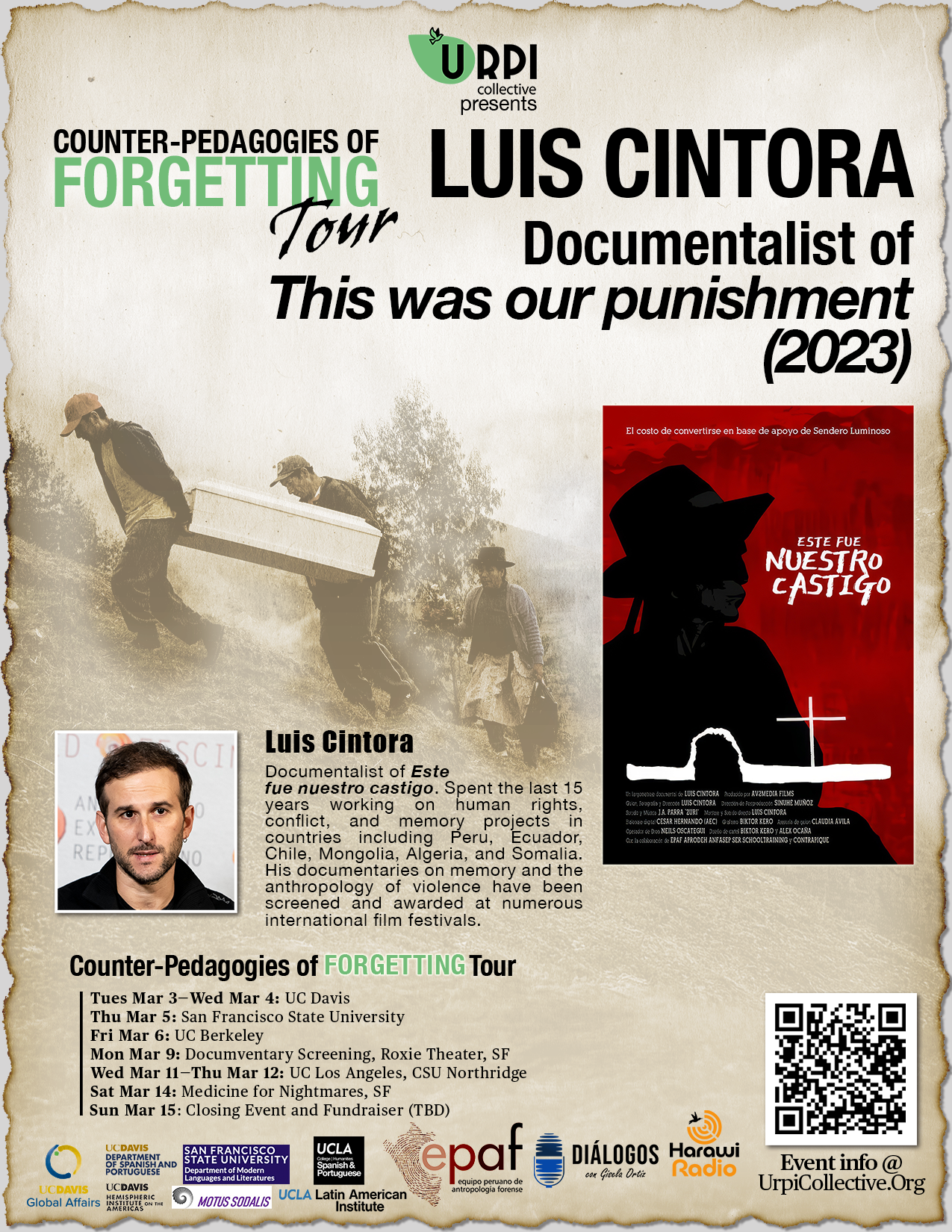
Luis Cintora
Este fue nuestro castigo (2023)
BIOFILMOGRAPHY
Over the past 15 years, he has been involved in documentary filmmaking and in human rights advocacy and promotion projects in Peru, Ecuador, Chile, Mongolia, Algeria, and Somalia. He has created a series on memory and the anthropology of violence in Peru, consisting of 14 documentaries, including Te Saludan Los Cabitos and Este fue nuestro castigo, which have been screened and awarded at numerous international film festivals.
He has collaborated with the Memory Department of the Peruvian Forensic Anthropology Team (EPAF), the audiovisual department of the Museum of Memory in Santiago, Chile, and with other human rights organizations, victims’ associations, and communities affected by violence in Peru.
He currently continues his documentary work on human rights, conflict, and memory in Peru, and is completing a final feature-length documentary on symbolic reparations and the search for missing persons in the department of Huancavelica.